
Professional education

Complete Elixir Academy


Where formulation science becomes professional treatment knowledge. Professional skin science, formulation logic, and treatment protocols taught where the products are actually developed and made. Complete Elixir Academy is designed for estheticians who want to understand not only what to use, but why it works, when to use it, and how to adapt treatment decisions to complicated skin.

Training connects skin biology, active ingredients, formulation, barrier function, pigmentation, acne, recovery, and treatment-room application. Courses combine structured theory with practical protocols, product evaluation, and hands-on learning developed directly from Complete Elixir’s laboratory and professional treatment experience.

Selected programs also include laboratory-based training, allowing practitioners to see how formulas are designed, processed, evaluated, and translated into professional treatment systems.

Cohorts are offered in English or Korean, with each group taught entirely in one language to keep the learning clear and consistent. Upcoming English cohort dates will be announced once confirmed.

Formulating a batch with an overhead stirrer in the COMPLETE ELIXIR laboratory in Surrey, BC
How this course is scoped

Three abilities, not a diagnosis

Estheticians do not diagnose and do not treat disease. Every module is built around that boundary rather than around it.

01

Recognise

Read what is in front of you, and know what it is commonly mistaken for.

02

Do not aggravate

What is safe, what is conditional, and what is an absolute contraindication.

03

Refer

Clear thresholds for sending a client to a physician, and what to do when you are not sure.

Weighing a phase
At the bench
Under the stirrer

Filmed during a Complete Elixir Academy session in our laboratory in Surrey, British Columbia.

Your educators

Taught where it is made, and where it is used

The science comes from the lab. The hands come from the treatment room. Each educator teaches the part of the work they practise every day with Complete Elixir.

Clara Song, PhD, founder, formulator and lead educator of Complete Elixir Academy
Founder & Formulator · Lead Educator

Clara Song, PhD

Surrey, British Columbia

Clara brings together scientific insight, formulation expertise, and professional skin care education. She holds a PhD in healthcare, wellness, and longevity data science and develops every Complete Elixir formula in the company’s own laboratory in Surrey, British Columbia.

At Complete Elixir Academy, she leads education in skin biology, professional device principles, and treatment protocol design. Her teaching connects the science behind the skin with thoughtful product selection and structured treatment planning, helping practitioners build a clear rationale for every step of care.

  • PhD · Healthcare, Wellness & Longevity Data Science
  • Diploma in Medical Aesthetics
  • In-House Product Formulation
  • Skin Science & Treatment Protocols
Lauren Kim, Complete Elixir Academy educator
Educator · Problem Skin & Microneedling

Lauren Kim

Burnaby, British Columbia

Lauren brings more than six years of hands-on experience to practical, treatment-focused education. Her expertise spans eczema-prone skin, acne-prone skin, and barrier-supportive care, with an emphasis on understanding skin needs and adapting each stage of treatment.

At Complete Elixir Academy, she teaches skin assessment, product selection, and treatment sequencing, alongside microneedling theory and hands-on techniques. Her approach connects classroom learning with practice on the treatment bed, helping practitioners develop a consistent, considered approach to caring for challenging skin.

  • 6+ Years in Practice
  • Eczema-Prone & Acne-Prone Skin
  • Skin Barrier Support
  • Microneedling Theory & Practice
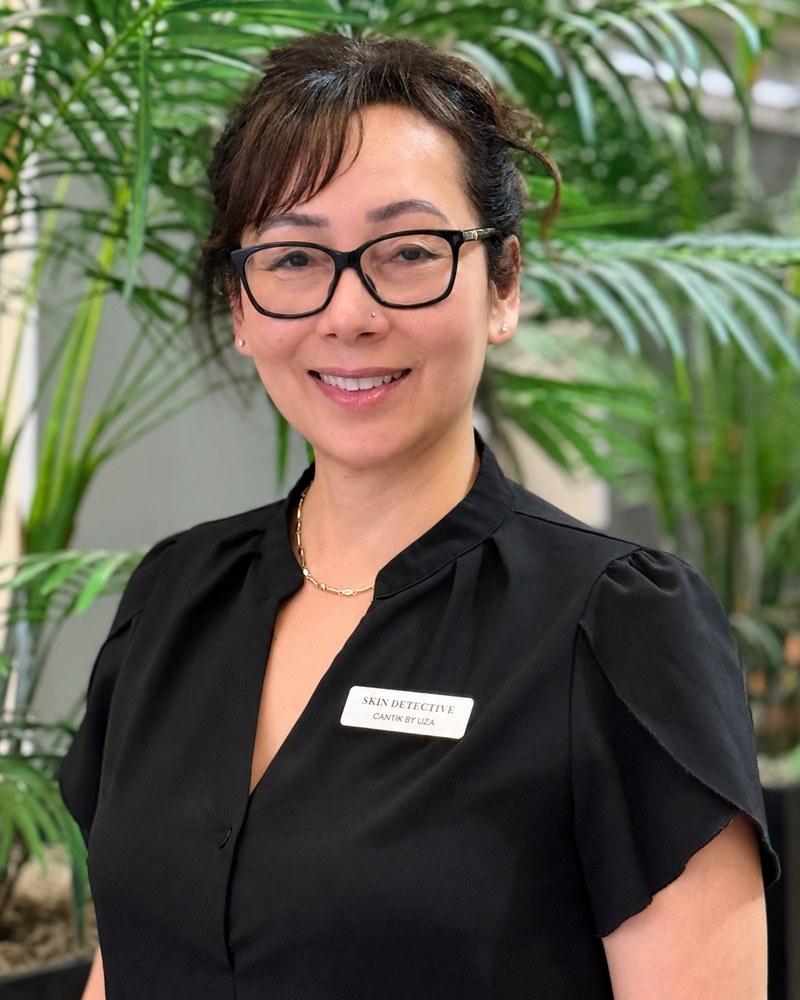
Liza James, Complete Elixir Academy educator
Educator · Holistic Integrative Care

Liza James

Surrey, British Columbia

Liza brings more than 26 years of experience in holistic esthetics and is the creator of The Cantik Method, which combines facial sculpting, gua sha, buccal massage, lymphatic drainage and facial reflexology to ease muscle tension, encourage circulation, and support the skin’s natural recovery.

At Complete Elixir Academy, she teaches The Cantik Method through guided, hands-on instruction. Each massage sequence integrates technique with Complete Elixir formulas, helping practitioners refine their touch and deliver a cohesive facial experience shaped by intention, precision, and attentive care.

  • 26+ Years in Practice
  • Creator of The Cantik Method
  • Holistic Integrative Care
  • Facial Sculpting & Lymphatic Drainage
Track one

Foundations

The groundwork. These have already run with practising estheticians and are repeated for new cohorts.

Module I

Skin Biology and Structure

How skin is built, layer by layer, and what each structure does.

What is covered Close

The vocabulary every other module depends on, taught properly once so that nothing later has to be hand waved.

The five epidermal layers and what each one is actually doing, rather than a diagram to memorise: where cells divide, where they commit, where they flatten and where they leave. The dermal matrix underneath, the junction between the two, and the appendages that pass through both. Melanocytes, Langerhans cells and Merkel cells in the places they actually sit, and what each one is for.

Then the part that changes practice. The receptor table and what a receptor is listening for, which is why the same product lands differently on two faces. Temperature, and what retained heat sets off downstream. Skin condition against skin type, which is the distinction that decides whether you are treating a state that will pass or a structure that will not.

It closes on the order in which a skin is normalised, because sequence is what the rest of the course keeps returning to.

Module II

Actives and Ingredients

What makes an active an active, and what it needs to stay functional.

What is covered Close

How ingredients behave together in a formula rather than side by side on a label.

Stability and what destabilises it, working pH windows, solubility and where a molecule can actually travel, delivery and contact time, and the difference between a concentration printed on a carton and a dose that reaches the layer where it works. An ingredient list is a starting point for a question, not an answer.

The four layers of evidence behind any claim, in vitro, ex vivo, consumer perception and clinical, and how far each one reaches. Supplier data against finished product data. Which of the ingredients you use every day carry strong evidence, which carry thin evidence, and how to say that to a client without either overselling it or dismissing it.

Then compatibility in practice: what may be layered, what cancels out, what needs a gap between applications, and the combinations that look clever and are not.

Module III · 4 sessions

Purging

Expulsive reactions, understood properly.

What is covered Close

What purging is, why it happens, how long it should reasonably last, and how to tell it apart from a reaction you need to stop. The question clients ask most and the one practitioners get wrong most.

Three different things get called purging and only one of them is purging. Irritant contact dermatitis occurs in roughly 85 percent of topical retinoid users, so the reaction in front of you is far more likely to be the common one than the interesting one. The module gives you the observations that separate them and the timeline each one follows.

Then the three dials you actually control. Frequency, set against a measured recovery curve rather than against habit. Concentration, treated as a pairing between the active and the skin rather than as a number on a bottle. Contact time, which has the best evidence of the three: short contact tretinoin cut mild irritation to 17.6 percent and discontinuation to 5.4 percent, with efficacy the authors call superimposable.

Four sessions, because the distinction is where most treatment plans fail, and because continue, reduce, pause and refer are four different answers to four different situations.

Module IV

Pigmentation

How pigment is made, why it persists, and what actually influences it.

What is covered Close

How pigment is made, why it persists, and what genuinely influences it.

Melanogenesis from trigger to transfer: what activates a melanocyte, what the enzyme chain does, and how pigment reaches the keratinocytes that carry it to the surface. The difference between epidermal and dermal pigment, and why that difference decides whether a result is possible in weeks or not possible at all.

Three routes produce the same mark, and the route decides the active. Oxidative pigment answers to antioxidants, which act twice: scavenging reactive oxygen species, and reducing dopaquinone back so the chain cannot complete. A continuously activated melanocyte answers to tyrosinase inhibition. Inflammation driven pigment answers to the inflammatory signal being interrupted, which is where tranexamic acid has its evidence.

It closes on why the most aggressive approach is so often the one that sets a client back months, including what an energy treatment does to a melanocyte that is already switched on, and what pre and post treatment cover actually buys you.

Module V

Barrier Control and Recovery

How the epidermal barrier fails, and how it rebuilds.

What is covered Close

The barrier is not moisture. It is a control system, and this module follows it through failure and back.

Six stages of collapse, in order: stimulus, receptor activation, inflammation, lipid breakdown, rising water loss, hypersensitivity. Then five stages of recovery, also in order, with what helps and what hinders at each one.

Two findings drive the whole module. Applying one or two of the three barrier lipids delays recovery rather than helping it, which rules out a great many products that look entirely reasonable on a label. And water loss after disruption is not only the damage: it is the signal that switches lipid synthesis back on, which is why sealing a barrier shut too early is not the kindness it appears to be.

Sequence matters more than strength, and that sentence is the spine of everything Complete Elixir formulates. It is also the module that changes the most treatment plans.

Module VI

Dermal Energy and Cell Recovery

Heat in the dermis, and the recovery window afterwards.

What is covered Close

Heat in the dermis, and the recovery window that follows it.

Where cellular damage comes from in energy based treatments, how to think about thermal load rather than about settings, and what separates a dose the tissue repairs from one it does not. Written for practitioners who work alongside device based clinics and need to know what arrived before them.

Then inside the cell, because that is where the repair is either possible or not. Mitochondria, and why ageing skin is so often energy short skin. The nucleolus to ribosome to protein route, which explains why a good ingredient sometimes does nothing at all. The clearance machinery that connects back to both pigment and barrier.

The last part is the days afterwards: what the skin needs and in what order, what to withhold and for how long, and what a fibroblast in defence mode will not build no matter what you put on top of it.

Track two

Problem Skin Science

One condition at a time, three or four sessions each, rather than fifteen minutes at the end of a general course.

Module I · 8 sessions

Eczema Skin

Barrier science for skin that has lost its own defences.

What is covered Close

Barrier science for skin that has lost its own defences.

Lipid and filaggrin deficiency, and why the defect is structural rather than a matter of neglect. The itch and scratch cycle, and why atopic itch runs largely outside the histamine pathway, which is why antihistamines disappoint the people who try them. Heat sitting on the same neurons as the itch signal, which is why a warm room undoes a good treatment.

The seven observations that describe the skin in front of you, the differentials, and a green, yellow and red safety gate with its red flags, so that treat, modify or refer is decided before your hands go on.

The strongest evidence in the course is also the least glamorous. Consistent emollient use produced fewer flares, a median time to flare of 180 days against 30, and less corticosteroid needed, while the same review found no reliable evidence that one moisturiser outperforms another. Eight sessions. The first cohort ran July to August 2026.

Module II · 4 sessions

Rosacea

Phenotype, mechanism, medical treatment, and what the treatment room can and cannot do.

What is covered Close

Phenotype, mechanism, medical treatment, and what the treatment room can and cannot do.

Rosacea is a chronic inflammatory condition of the central face, and the first session separates it from sensitive skin. Flushing against persistent erythema. The 2017 move from subtype classification to phenotype, and why you record what you see instead of fitting a client into one of four boxes. A meta-analysis of 32 studies put prevalence at 5.46 percent, so it is already among your clients. Differentials against acne, seborrhoeic dermatitis and contact dermatitis.

Then the mechanism, read at the level of evidence it actually has. Innate immune signalling through TLR2, KLK5 and the processing of cathelicidin into LL-37, the neurovascular pathway through TRP channels, and a weakened barrier that raises the response to every other trigger. The barrier is the part of that picture a treatment room can work on.

What medical care does: treatment chosen by what the skin shows, and how certain the evidence behind each option is, so that treatment-room work supports prescribed treatment instead of competing with it. Steam, exfoliation, acids, alcohol, fragrance and heavy massage, and why each one is set aside.

Consultation notes that describe instead of diagnose, home care built on gentle cleansing, moisturising and daily sun protection, the maintenance phase after clearance, and referral thresholds in three tiers, from emergency to routine. Four sessions. The first cohort runs in October 2026.

4 sessions

Contact dermatitis

Irritant against allergic, and how to tell them apart.

What is covered Close

Irritant against allergic, and how to tell them apart.

Two mechanisms that produce a similar looking rash and call for opposite next steps. What each one does to the skin, how the timing differs, what the margins look like, and the questions that separate them in a consultation rather than in a laboratory.

Tracing the cause, worked as a narrowing sequence rather than a guess: the cosmetic ingredients most often implicated, metals, and occupational exposure. Patch testing, what it tells you and what it does not, and how long a result takes to mean anything.

Then recovery, which is where the treatment room does most of its work. The acute phase, the barrier repair that follows it, how to rebuild a routine without restarting the cycle, and what to do in the first thirty minutes when a client arrives saying a product did this. Four sessions.

4 sessions

Seborrheic dermatitis

Sebum, microbiome and inflammation together.

What is covered Close

Sebum, microbiome and inflammation, taken together rather than one at a time.

What the condition is and where it sits: the nasolabial folds, the brows, the hairline and behind the ears, following the oil rather than the face as a whole. How that reads against rosacea, and why the two together are not rare.

Why it returns. Malassezia and its relationship with sebum composition rather than with sebum quantity alone, and the seasonal and stress pattern clients describe before you have asked. This is a managed condition and not a cured one, and the module gives you the words for that conversation.

Then treatment and management as two axes that must not collide: the antifungal approach used medically, what cleansing and product selection can actually do, scalp work alongside the face, and why the instinct to degrease harder is the one that keeps the cycle running. Four sessions.

3 sessions

Psoriasis

What it is, what it is not, and where skin care fits.

What is covered Close

What it is, what it is not, and where skin care fits.

An autoimmune disorder of keratinisation rather than a dry skin problem, with the differentials that matter most in practice, seborrhoeic dermatitis and eczema among them. What the plaques are, where they sit, and what the nails can tell you before anything else does.

The systemic picture behind it: the immune axis, the comorbidities that change how you treat the person rather than the patch, and an overview of topical, phototherapy and systemic management, so that what you do sits alongside medical care instead of across it.

The practice session is built around the Koebner phenomenon, because friction, extraction and aggressive exfoliation can raise new lesions on skin that was clear. Absolute contraindications, what is permitted, and the point at which you stop and refer. Three sessions.

3 sessions

Folliculitis

Distinguishing it from acne, which changes everything.

What is covered Close

Distinguishing it from acne, which changes everything that follows.

Bacterial, fungal and mechanical folliculitis look alike and answer to different things. Definition and classification, how each one presents, and the order in which you narrow the cause rather than guessing at it.

Malassezia folliculitis against acne is the misidentification that costs the most, so it has a session of its own: uniform papules without comedones, itch rather than tenderness, distribution across the chest, back and hairline, and a history of antibiotics that did nothing or made it worse. Treated as acne, it gets worse.

Then the part that belongs to the treatment room. Post hair removal care, which is where folliculitis is most often created rather than found, and infection control for tools, hands and surfaces. Three sessions.

Track three

Clinical protocols

Treatment room training with written protocols, not a device demonstration. Recovery first, results follow.

Ultrasound Recovery Seven steps

Ultrasound Recovery

Ultrasound is not a machine for working the skin hard. It delivers actives into skin that is relaxed, and the protocol exists to put the skin in that state first.

Inside the protocol Close

Seven steps from cleanse to home care. Sonophoresis delivery is worked as three zones at about twelve minutes each, so a full face runs to roughly thirty six minutes.

The mechanism comes first, because it decides everything after it. Cavitation is what moves an active across the barrier and heat is the minor contributor, which is why turning the output up is not how you get more out of a session. The honest figure: therapeutic ultrasound at 1 to 3 megahertz is reported to enhance transdermal transport typically by less than tenfold, while the dramatic numbers in trade material come from 20 kilohertz laboratory equipment that is not what is in your hand. One direct comparison found no significant increase at 10 megahertz at all.

Then the working decisions. A dosage guide that moves time, quantity and starting intensity together rather than one at a time. The serum mix, coupling and glide. Zone pathways, and the recovery stages that decide the result. The four rules that override everything else, beginning with maintain glide, and skin response comes first.

Screening and the contraindications that matter, including why you never treat immediately after skin boosters or fillers. Device neutral: any professional handpiece with a sonophoresis mode.

Cell Infusion Microneedling Seven steps and four days

Cell Infusion Microneedling

Microneedling creates controlled microchannels. The treatment does not end when the needling stops.

Inside the protocol Close

One stage stimulates the skin. Six stages come after it. That ratio is the protocol, and the recovery phase is where most of the appointment is actually spent.

Cleanse, numb and prepare, build the serum mix, microneedling, reapply serum, about thirty six minutes of ultrasound infusion across three zones, then fifteen minutes or more of hydrating gel recovery, finishing with Clarity and Beauty of Balance.

The serum mix is a clinical decision rather than a default recipe, chosen against six things: what the skin is doing today, the objective for this session, the planned depth, sensitivity, pigmentation tendency and barrier condition. It is loaded into a disposable needleless syringe for cross contamination control and never reused.

The endpoint is the appropriate tissue response, not the greatest depth. Ultrasound after needling is recovery, not more stimulation. Home care reopens the routine in stages from Day 0 to Day 3, and the client advances only if the skin has settled.

Signature Facial Program Full treatment

Signature Facial Program

The complete Complete Elixir treatment, taught end to end.

Inside the protocol Close

It begins at cleansing, and cleansing is the first clinical decision of the treatment rather than a warm up. A cleanser that strips closes the skin down for everything that follows, so the oil is chosen by its fatty acid profile, the surfactant system by what it leaves behind, and the working pH belongs to the protocol rather than to the label.

From there the treatment is built around recovery instead of intensity. Each stage advances on the condition of the skin in front of you rather than on the clock, and the barrier is what is protected at every step, because a barrier that is still working is what lets the next stage do anything at all.

Built so your team can repeat it without drift, with the home care handover and the retail conversation that follow from what you actually did.

Ask about the program

Track four

Lab Master Class, Canada

A five day residency inside the Surrey lab where Complete Elixir is made. Five seats a cohort, 10:00 to 16:30 daily, 32.5 hours in total. Each participant formulates one serum from the first weighing to the finished batch record, then judges it against the products on the shelf. Full details are sent on enquiry.

Day 1

Skin, Formula, Intelligence

Skin physiology and formulation chemistry, built into one working language.

Inside the day Close

Skin as a system: the lamellar structure of the stratum corneum and its water gradient, the ceramide, cholesterol and fatty acid ratio and why one alone fails, what a TEWL reading tells you and what it does not, the loop between micro inflammation and pigment, and how skin reactivity collapses. Then the variables that change after peels, lasers, ultrasound and microneedling, and why professional grade design is a separate discipline.

Formulation as physical chemistry: water, oil and glycol phases, solubility and partition behaviour, delivery routes and contact time, the four ways an emulsion fails, working pH windows and buffering, and preservation, chelation and oxidation.

The day closes with each participant writing a design brief: target skin, moment of use, place in a routine, and what they are willing to give up. That brief becomes the target specification at the Day 2 bench.

Day 2

Simplicity is Intelligence

One serum, from the first weighing to the finished batch record.

Inside the day Close

A serum has nowhere to hide. No emulsifier, no powder and no silicone film to cover for it, so the structure shows.

Lab discipline and how a batch record is written. Water phase and chelation, and why the same formula in a different order becomes a different product. Active integration, charge point and temperature, antioxidant protection and oxygen pick up. pH adjustment on a calibrated meter, and the drift that follows in the next twenty four hours. Viscosity and sensory build recorded against the clock. Preservative load, then filling, headspace, labelling and lot assignment.

Each participant lays down a simple stability set on this day: an ambient control, freeze and thaw, a warm shelf at 45 degrees Celsius, and a windowsill light sample. They are read on Day 3 and scored on Day 5.

Day 3

Authority Calibration

Judgment moves from impression to measurement, with no instrument you could not buy twice.

Inside the day Close

A field test kit that needs only a balance, a pH meter, glass plates, a timer and a freezer. Dosed spread, tack, glass plate residue, water break, pilling, an afterfeel timeline at 15, 30, 60 and 120 minutes, and an inclined plate slump for relative viscosity.

Bench work on commercial products: measured pH against label pH, behaviour on dilution, a solubility rack, and a 50 degrees Celsius hold that shows separation tendency early.

Reference samples laid down eight and four weeks before the cohort are opened and scored against a fixed rubric. A contact slide preservation demonstration makes the point visible, and is taught explicitly as a demonstration rather than a validation, because challenge testing belongs to an accredited laboratory.

The day ends with a blind set. Participants may bring products from their own back bar, and Complete Elixir goes onto the same protocol.

Day 4

From Formula to Trust

What turns a formula into a product, and a product into trust.

Inside the day Close

Claim literacy: how far in vitro, ex vivo, consumer perception and clinical studies each reach, what clinically proven actually underwrites, the difference between supplier data and finished product data, and the three things to check first in any dossier.

When to commission external testing: microbial limits, challenge testing, stability and irritation, what distribution, export and retail listing each demand on paper, and how to build cost and turnaround into a plan.

From lab object to market object: directions and dose, the container the formula dictates, material compatibility and light and oxygen transmission, batch codes and period after opening, and how unit cost is really built in small batch production.

Regulatory frame across markets, including Canadian cosmetic notification, European notification and safety assessment, United States MoCRA and Korean functional cosmetics, with the line between a cosmetic claim and a drug claim drawn precisely.

The day closes with consultation work: translating client language into physiological cause, separating what the product did from what the skin was already doing, layering and contraindications, and how to say no when no is the answer.

Day 5

Body, Skin, Nature

The samples are read, the field is seen, and the standard is fixed.

Inside the day Close

The samples are read, the field is seen, and the standard is fixed.

Final scoring of the freeze and thaw, warm shelf and light exposed samples laid down on Day 2, read against the ambient control and alongside the four and eight week reference set. Each participant finds out where their own prediction held and where it did not, which is a more useful morning than a formula that happened to survive.

The afternoon is spent at a partner spa running Complete Elixir, because a product behaves differently in a working back bar than it does on a bench. Storage and decanting, open pack control and turnover, a live protocol from start to finish, and how post treatment home care is actually handed to a client rather than how it reads on a card.

The week closes by revisiting the design brief written on Day 1, settling the final version against everything learned since, and writing the ninety days of action that follow the return home. That last document is the point of the week: it is what stops a residency from turning into a memory.

On completion

What you take home

The week leaves with you as documents and objects, not as recollection.

Inside the day Close

The week leaves with you as documents and objects rather than as recollection.

The serum you made, lot numbered and marked with a period after opening. Small quantities travel with you and larger quantities are shipped.

A formula sheet in your own name, with phase structure, order of addition, target pH and target viscosity. The original batch record beside it: weights, temperatures, times and observations. That second document is the only thing that lets you make it again, which is why it is written while you work rather than afterwards from memory.

Your own stability read out, scored by you on Day 5 rather than handed to you. And the design brief written on Day 1 and settled on Day 5, which becomes the standard you apply to every product you assess afterwards, including the ones you are being sold.

A certificate: Complete Elixir Academy, Lab Master Class, issued on completion of all five days.

Before you write

Practical details

Five seats a cohort, five days, 10:00 to 16:30 each day.

Inside the day Close

Five seats a cohort, five days, 10:00 to 16:30 each day, 32.5 hours in total.

There is no fixed annual calendar. A cohort is scheduled once applications come in and the dates are agreed with the group, which is what makes five seats workable in a laboratory that is also producing.

Included: lab materials, equipment and protective wear, lunch on all five days, and the partner spa visit with transport arranged. There is nothing to bring. Not included: airfare, local transport, accommodation and living costs.

Taking your formulas home is permitted. Small quantities travel with you and larger quantities are shipped. A letter of invitation for visa purposes is issued on request once a place is confirmed.

The fee is quoted on enquiry, together with the cohort dates. Write to us and we will send the full day by day curriculum, the fee and the application steps.

Ask about the Lab Master Class

Dates and format

What is running

Language

English or Korean. Each cohort is taught in one language, matched to the group.

English cohort

Dates will be announced once confirmed. Write to us and we will tell you first.

Running now

Problem Skin Science, track two, in Korean

Dates

2 October 2026 to 26 February 2027

Sessions

18 sessions, 90 minutes each, run straight through without a break

When

Fridays at 09:00 Korea Standard Time

Format

Live online, with a reading handout for each session

Foundations

Track one has already run and is repeated for new cohorts. Write to us for dates.

Protocol training

Taught separately, in person and online

Lab Master Class

Five days in Surrey, British Columbia. Five seats a cohort, scheduled once applications come in.

Who it is for

Working estheticians, spa and clinic staff, and esthetics students in their final year

Fee

On enquiry. Write to us and we will send the current cohort fee and enrolment window.

Course materials are prepared for enrolled participants only. Reproduction, redistribution and commercial use are not permitted.

On completion

A certificate that reflects the work behind it

Complete a full Complete Elixir Academy module and receive a numbered Certificate of Completion, issued by Complete Elixir Academy in Surrey, British Columbia, Canada.

The certificate confirms that you have completed structured professional education in the subject area of the course, including the underlying skin science, formulation principles, active ingredients, treatment considerations and practical protocols covered in the program.

What is on it Close

What your certificate includes

Each certificate records the program name, completed module, participant name, completion date, unique certificate number, and the signature of Clara Song, PhD, Founder and Formulator.

Complete Elixir Academy is structured as a continuing professional learning system. As practitioners return for additional modules, each completed course becomes part of a growing record of training across skin science, formulation, active ingredients, treatment protocols and recovery-focused care.

The certificate documents the education completed through the Academy and can be displayed in a treatment room, clinic, professional portfolio or training record.

Certificates are issued in English regardless of whether the cohort is taught in English or Korean.

Enrolment

Ask about a seat

Tell us where you practise, which track you are after, and which language suits you. We will reply with the next cohort dates, the fee and what is involved. Lab Master Class enquiries receive the full five day curriculum by return.

We reply within 24 hours, Monday to Friday. Your details are used to answer this enquiry and are not passed to anyone else.